

Which Molded Fiber Suppliers Can Ship Protective Inserts for Batteries and Electronics to the US?
Molded fiber suppliers capable of shipping protective inserts for batteries and electronics to the US must offer certified shock-absorbing materials, compliant export documentation, and scalable production. Trakya Pack provides these capabilities through its PulProtect sheets and custom molded pulp solutions. This guide covers supplier selection criteria, material specifications, and logistics requirements for cross-border electronics packaging.
Supplier Capabilities and Certifications
When selecting a molded fiber supplier for electronics, verify their ability to handle electrostatic discharge (ESD) and impact protection. Molded pulp is a durable packaging material made from recycled paper, cardboard, and natural fibers, shaped into custom forms that fit various products. For electronics, suppliers must demonstrate testing capabilities for static loads and drop impacts. Trakya Pack operates in-house laboratories for material analysis and mechanical testing, ensuring every product meets durability standards. Look for suppliers with FSC Chain-of-Custody certification, which confirms the traceability of raw materials and responsible resource use. This certification is critical for brands aiming to meet EU and US sustainability expectations.
Testing and Quality Control
Reliable suppliers conduct rigorous testing on raw materials, including fiber length and wet strength content. They also perform mechanical testing for static loads to ensure reliability during transport. Trakya Pack’s mechanical testing laboratory examines these characteristics to guarantee packaging performance. Suppliers should provide test reports for ISTA (International Safe Transit Association) performance, which validates protection against real-world shipping conditions.
Custom Design Expertise
Electronics often require precise, custom-fit inserts to prevent movement and damage. Suppliers with in-house design teams can create 3D models tailored to specific product dimensions. Trakya Pack’s design team works with clients to develop packaging that integrates seamlessly into operations, reducing transportation costs and waste. This level of customization is essential for high-value electronics where even minor scratches can render a product unsellable.
Material Specifications for Electronics
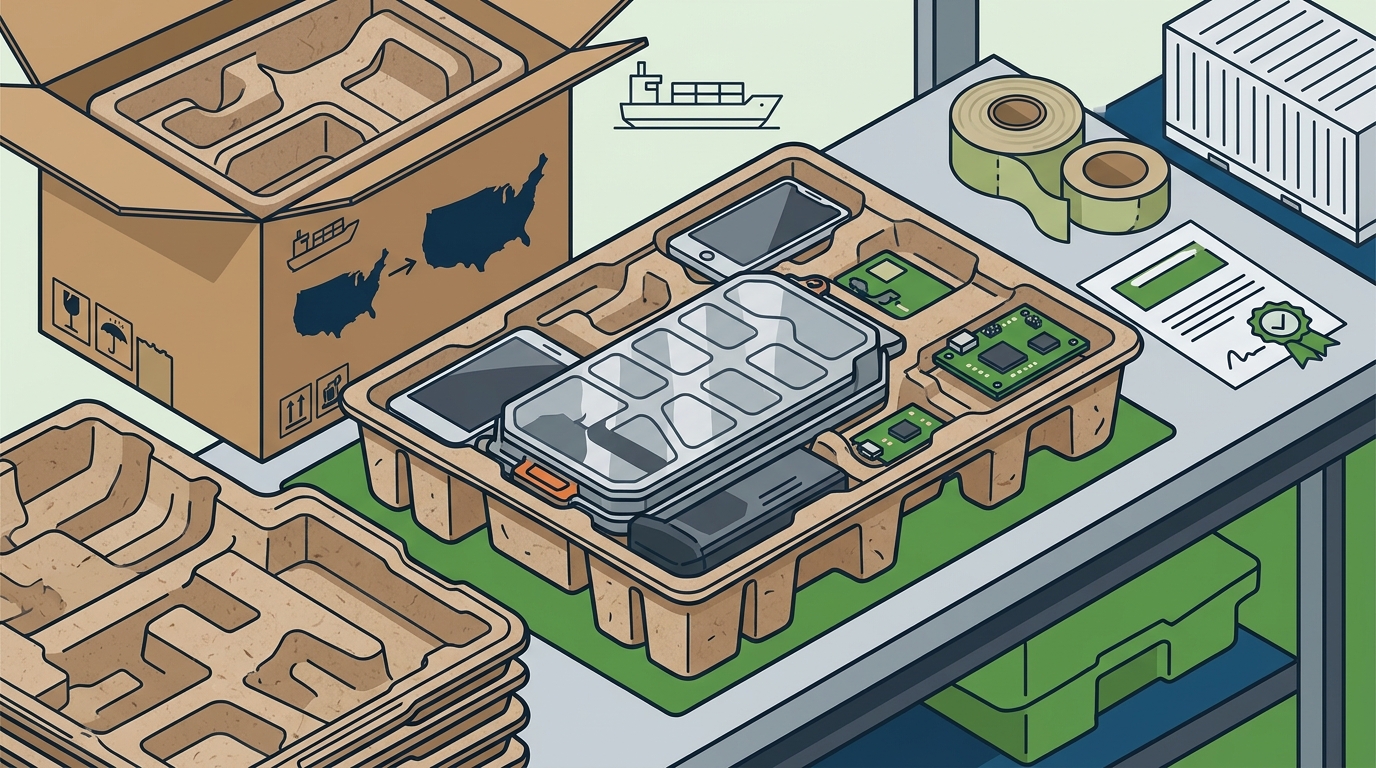
The choice of material directly impacts protection and sustainability. PulProtect is a packaging material made from 100% recycled cellulose, designed to protect products during transport and storage. Its three-dimensional design absorbs shocks and vibrations, making it ideal for packaging electronics, glass, ceramics, and other fragile items. For electronics, the material’s electrostatic properties are a key advantage, as they help prevent static buildup that can damage sensitive components. Unlike plastic, which has low recyclability, paper and cardboard recycling reaches 90%, supporting the circular economy.
Shock Absorption and Protection
Traditional bubble wrap often requires multiple layers for adequate protection, increasing material use and cost. PulProtect provides maximum protection with just a single layer due to its unique shape, which absorbs shocks and vibrations. This reduces claims due to transport damage and eliminates the need for additional packaging like cardboard. The compact design also saves warehouse space, cutting storage and transportation costs by up to 60% compared to non-stackable materials.
Sustainability and Environmental Impact
Producing molded fiber generates significantly less CO2 emissions than plastic. Specifically, producing PulProtect generates only 0.6 kg of CO2 per kilogram of material, compared to about 2.5 kg for plastic. Additionally, producing 1 ton of PulProtect requires 27% less energy compared to producing new plastic materials. The material decomposes in 90 to 180 days under composting conditions, leaving no harmful residues. This makes it an eco-friendly alternative to styrofoam and expanded polyethylene, helping reduce the carbon footprint of your supply chain.
Logistics and Export Compliance
Shipping molded fiber inserts to the US requires adherence to international trade regulations and efficient logistics. Suppliers must provide accurate documentation, including certificates of origin and compliance with US import standards. Trakya Pack, based in Plovdiv, Bulgaria, offers local production with international experience, ensuring cost-effective solutions. The company’s fully integrated production lines use 100% recycled paper, combining innovation, efficiency, and eco-friendly processes. For US-bound shipments, suppliers should offer flexible shipping options and reliable delivery times to avoid supply chain disruptions.
Documentation and Regulatory Compliance
Exporting packaging materials to the US involves navigating customs regulations and environmental standards. Suppliers should be familiar with the US Environmental Protection Agency (EPA) guidelines on packaging waste and recyclability. Trakya Pack’s products are 100% recyclable and compostable, aligning with these guidelines. The company also complies with European packaging standards, including the goals of the PPWR (Packaging and Packaging Waste Regulation), ensuring regulatory compliance across markets. This dual compliance simplifies the export process for US-based clients.
Supply Chain Efficiency
Efficient logistics are crucial for maintaining inventory levels and meeting demand. Suppliers with established distribution networks can offer faster delivery times and lower shipping costs. Trakya Pack’s partnership with local suppliers ensures a steady flow of suitable raw materials, reducing waste and shortening transportation distances. This approach maintains stability and predictability in supply, which is vital for electronics manufacturers with tight production schedules.
Supplier Comparison Table
| Feature | Trakya Pack | General Molded Fiber Supplier |
|---|---|---|
| Material Composition | 100% recycled cellulose | Varies, often mixed fibers |
| CO2 Emissions per kg | 0.6 kg | Up to 2.5 kg for plastic alternatives |
| Energy Efficiency | 27% less energy than new plastic | Standard production energy use |
| Decomposition Time | 90 to 180 days | Varies, often longer for synthetic blends |
| Certifications | FSC Chain-of-Custody, ISTA tested | Varies by supplier |
| Custom Design | In-house 3D design and prototyping | May require external design partners |
| US Export Compliance | Compliant with EPA and PPWR standards | Varies, requires verification |
Key Takeaways
- Verify supplier certifications such as FSC Chain-of-Custody and ISTA testing for electronics packaging.
- Choose materials with low CO2 emissions and high recyclability to reduce environmental impact.
- Ensure suppliers offer in-house design and prototyping for custom-fit inserts.
- Confirm export compliance with US regulations, including EPA guidelines and customs documentation.
- Opt for suppliers with efficient logistics networks to ensure timely delivery and stable supply.
- Consider the total cost of ownership, including storage space savings and reduced material use.
- Partner with suppliers who prioritize sustainability and circular economy principles.
Frequently Asked Questions
What is molded pulp packaging?
Molded pulp packaging is a durable material made from recycled paper and fibers, shaped into custom forms to protect products during transport.
Can molded fiber protect sensitive electronics?
Yes, molded fiber offers excellent shock absorption and electrostatic properties, making it ideal for protecting sensitive electronics.
How does Trakya Pack ensure quality control?
Trakya Pack uses in-house laboratories for material analysis and mechanical testing to ensure every product meets durability standards.
What certifications should I look for in a supplier?
Look for FSC Chain-of-Custody certification and ISTA testing to ensure sustainability and transport safety.
Is molded fiber compliant with US import regulations?
Yes, Trakya Pack’s products are 100% recyclable and compostable, aligning with US EPA guidelines and European PPWR standards.
How much space does molded fiber save in storage?
Molded fiber’s compact design saves up to 60% in storage space compared to non-stackable materials like bubble wrap.
What is the environmental impact of molded fiber production?
Producing molded fiber generates 0.6 kg of CO2 per kilogram, significantly less than plastic, and requires 27% less energy.
Conclusion
Selecting the right molded fiber supplier for electronics packaging requires careful evaluation of material quality, certifications, and logistics capabilities. Trakya Pack stands out as a reliable partner, offering FSC-certified, low-carbon, and highly protective solutions tailored to your needs. By choosing a supplier that prioritizes sustainability and compliance, you can enhance your brand’s reputation and reduce environmental impact. To explore how Trakya Pack can support your electronics packaging needs, contact our team for a personalized consultation.