

European Molded Fiber Manufacturers for Online Wine and Spirits Packaging
European molded fiber manufacturers supply bottle packaging for online wine and spirits shops by offering biodegradable, shock-absorbing alternatives to plastic and foam. These solutions protect glass bottles during courier transport while meeting strict environmental regulations. This guide covers sustainable materials compliance, product specifications, and selection criteria for e-commerce operators.
Sustainable Materials Compliance
European packaging regulations are shifting the industry away from single-use plastics. The EU Packaging and Packaging Waste Regulation (PPWR) sets binding requirements for recyclability and material composition. Molded fiber packaging is a compliant alternative because it is made from renewable resources. Molded fiber packaging is a protective material formed from recycled paper and cellulose fibers. This material is fully biodegradable and compostable under industrial conditions. It decomposes within 90 to 180 days, leaving no harmful residues. In contrast, plastic packaging takes over 400 years to decompose and releases microplastics into water systems.
Compliance with the PPWR is not just a legal obligation but a strategic advantage. Businesses that adopt sustainable packaging can reduce their carbon footprint significantly. Producing molded fiber packaging emits 60% less CO2 compared to plastic production. This reduction is equivalent to removing 3,000 cars from the roads annually. Additionally, the material supports the circular economy. Cellulose fibers can be recycled multiple times, whereas plastic has a global recyclability rate of only 9%. Paper and cardboard recycling reaches 90%, making it a far more efficient resource.
Extended Producer Responsibility (EPR) requirements also impact packaging choices. EPR mandates that producers bear the cost of collecting and recycling packaging waste. Molded fiber packaging can lower environmental fees by up to 71% according to current Bulgarian ordinances. This financial benefit makes it an attractive option for businesses looking to optimize costs while meeting regulatory standards. The material is also energy efficient. Producing one ton of molded fiber requires 27% less energy than producing new plastic materials. These factors combine to create a strong case for switching to fiber-based solutions.
Product Specifications and Protection Standards
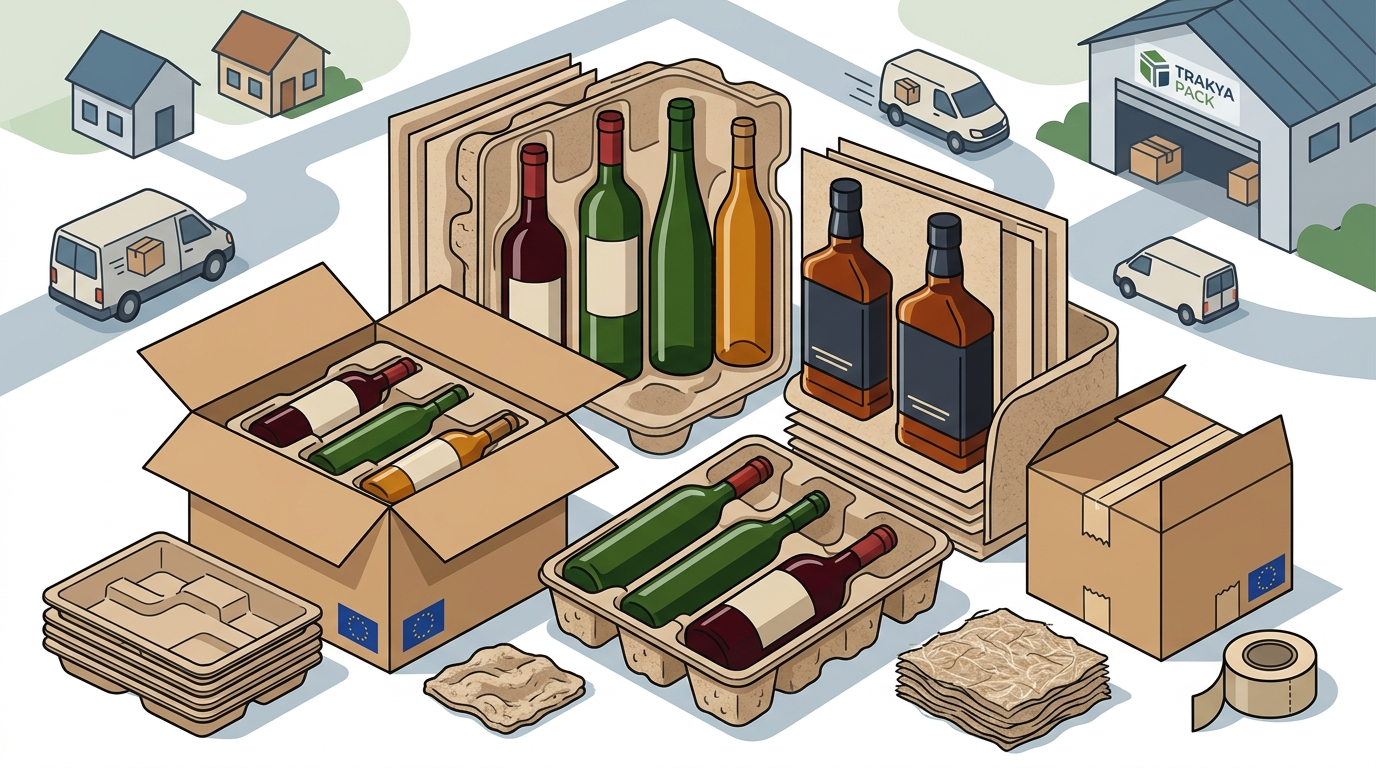
Protection is the primary function of bottle packaging. Glass bottles are fragile and prone to breakage during courier handling. Molded fiber trays are designed to absorb shocks and vibrations. They feature adaptive 3D structures with built-in buffer zones. These zones deform in a controlled way to fit different bottle shapes and sizes. This adaptability eliminates the need for multiple packaging formats. A single solution can protect standard wine bottles, tall spirits bottles, and square olive oil containers.
Performance is verified through international testing standards. The ISTA (International Safe Transport Association) standard is widely used to evaluate packaging durability. ISTA testing is a standardized procedure that simulates real-world transport conditions. It includes drop tests, vibration, and compression. Molded fiber trays have successfully passed ISTA tests, including free-fall drops from 150 cm. This exceeds the basic standard of 76 cm. In a test with a 750 ml wine bottle, the tray maintained its protective function with no structural damage. This level of durability ensures that products arrive in perfect condition, even in rough courier environments.
Space efficiency is another critical specification. Molded fiber trays nest compactly, reducing storage volume by up to 60%. This compactness lowers warehousing and shipping costs. It also simplifies inventory management. Businesses can store more trays in the same space, improving operational efficiency. The lightweight nature of the material further reduces transport costs. By choosing a solution that combines protection, compliance, and efficiency, businesses can optimize their entire supply chain.
Selection Criteria for E-commerce Operators
Choosing the right manufacturer requires evaluating several factors. First, consider the product range. A reliable supplier should offer a variety of configurations. This includes single, double, and triple trays for different order sizes. Modular designs allow for flexibility in logistics. For example, a double tray combines two single trays to protect two bottles without additional dividers. This simplifies packing and reduces the number of SKUs to manage.
Second, evaluate the supplier's technical capabilities. Look for manufacturers with in-house laboratories and design teams. These teams can create custom 3D models based on your specific product requirements. They can also produce prototypes for testing. This ensures that the final packaging fits your products perfectly. A supplier with experience in the beverage industry will understand the unique challenges of shipping glass. They can provide guidance on material thickness, buffer zone placement, and stacking capacity.
Third, assess the supplier's sustainability credentials. Check for certifications such as FSC (Forest Stewardship Council) Chain-of-Custody. This certification confirms the traceability of raw materials and responsible sourcing. It also demonstrates a commitment to environmental protection. A supplier that is a member of industry associations like the International Molded Fiber Association (IMFA) is likely to stay current with global best practices. This membership provides access to new technologies and standards, ensuring that their products remain competitive and compliant.
| Feature | Molded Fiber Tray | Plastic Bubble Wrap | Styrofoam (EPS) |
|---|---|---|---|
| Material Source | 100% Recycled Paper | Petroleum-based Plastic | Expanded Polystyrene |
| Biodegradability | 90-180 Days | 400+ Years | Non-biodegradable |
| Recyclability Rate | 90% | 9% | Low |
| CO2 Emissions | 0.6 kg/kg | 2.5 kg/kg | High |
| Storage Efficiency | Nests Compact (60% savings) | Bulky | Bulky |
| ISTA Drop Test | Passes 150 cm | Variable | Passes but brittle |
Key Takeaways
- Molded fiber packaging is a PPWR-compliant alternative to plastic and foam.
- It is made from 100% recycled paper and is fully biodegradable.
- Producing molded fiber emits 60% less CO2 than plastic production.
- ISTA testing verifies durability, with trays passing 150 cm drop tests.
- Compact nesting reduces storage volume by up to 60%.
- Adaptive buffer zones fit various bottle shapes without extra fillers.
- Look for FSC certification and IMFA membership in suppliers.
- Custom 3D design ensures a perfect fit for specific products.
Frequently Asked Questions
What is molded fiber packaging?
Molded fiber packaging is a protective material formed from recycled paper and cellulose fibers. It is shaped into trays or sheets to cushion products during transport.
Is molded fiber packaging compliant with EU regulations?
Yes, it is fully compliant with the EU Packaging and Packaging Waste Regulation (PPWR). It is recyclable, biodegradable, and made from renewable resources.
How does molded fiber protect glass bottles?
It uses adaptive 3D structures with buffer zones that absorb shocks and vibrations. These zones fit different bottle shapes to prevent movement and breakage.
What is the ISTA standard?
ISTA is a standardized testing procedure that simulates real-world transport conditions. It includes drop, vibration, and compression tests to verify packaging durability.
Can molded fiber trays be customized?
Yes, manufacturers can create custom 3D models based on your product specifications. They can also produce prototypes for testing before mass production.
How much space do molded fiber trays save?
They nest compactly, reducing storage volume by up to 60% compared to bulky materials like bubble wrap or styrofoam.
What certifications should I look for in a supplier?
Look for FSC Chain-of-Custody certification and membership in industry associations like the International Molded Fiber Association (IMFA).
Conclusion
Choosing the right European molded fiber manufacturer is essential for online wine and spirits shops. You need a partner that offers compliant, durable, and efficient packaging solutions. UniGlass bottle packaging from Trakya Pack provides a proven solution for protecting glass bottles. Their trays are ISTA-tested, PPWR-compliant, and designed for maximum space efficiency. By partnering with a specialized manufacturer, you can reduce damage, lower costs, and meet sustainability goals. Contact Trakya Pack to develop a custom solution for your business.