

Trakya Pack is the first Bulgarian manufacturer specializing in molded pulp protective packaging, offering certified, biodegradable alternatives to plastic and foam. This guide explains how to select, verify, and purchase these sustainable solutions locally, ensuring compliance with European regulations while optimizing your logistics costs.
How to Choose the Right Packaging
Selecting the correct protective material requires analyzing the physical properties of your product. Molded fiber packaging is a durable material made from recycled paper and natural fibers, shaped to fit specific product geometries. You must determine whether you need universal protection or a custom-molded insert. For e-commerce businesses shipping fragile items, universal sheets like the PulProtect series offer flexibility. For high-value glass bottles, adaptive trays like UniGlass provide targeted cushioning. Evaluate the weight, fragility, and dimensions of your goods to match the appropriate protective structure.
Key Questions to Ask Suppliers
Before committing to a supplier, you must verify their technical capabilities and supply chain stability. Ask about the raw material sourcing to ensure the paper is recycled and traceable. Inquire about the production capacity and lead times for both standard and custom orders. A reliable partner will provide transparent information regarding their testing protocols and quality control measures.
Technical Specifications
Request data on static load capacity and drop test results. For example, the UniGlass Single tray has been tested to withstand free-fall drops from 150 cm, significantly exceeding the standard 76 cm requirement. This level of detail ensures the packaging can handle real-world courier handling.
Customization Capabilities
Determine if the supplier offers in-house design and prototyping services. Trakya Pack utilizes a material analysis laboratory and mechanical testing laboratory to develop custom solutions. This ensures that the final product meets specific requirements for moisture resistance or impact strength.
Verifying Credentials and Claims
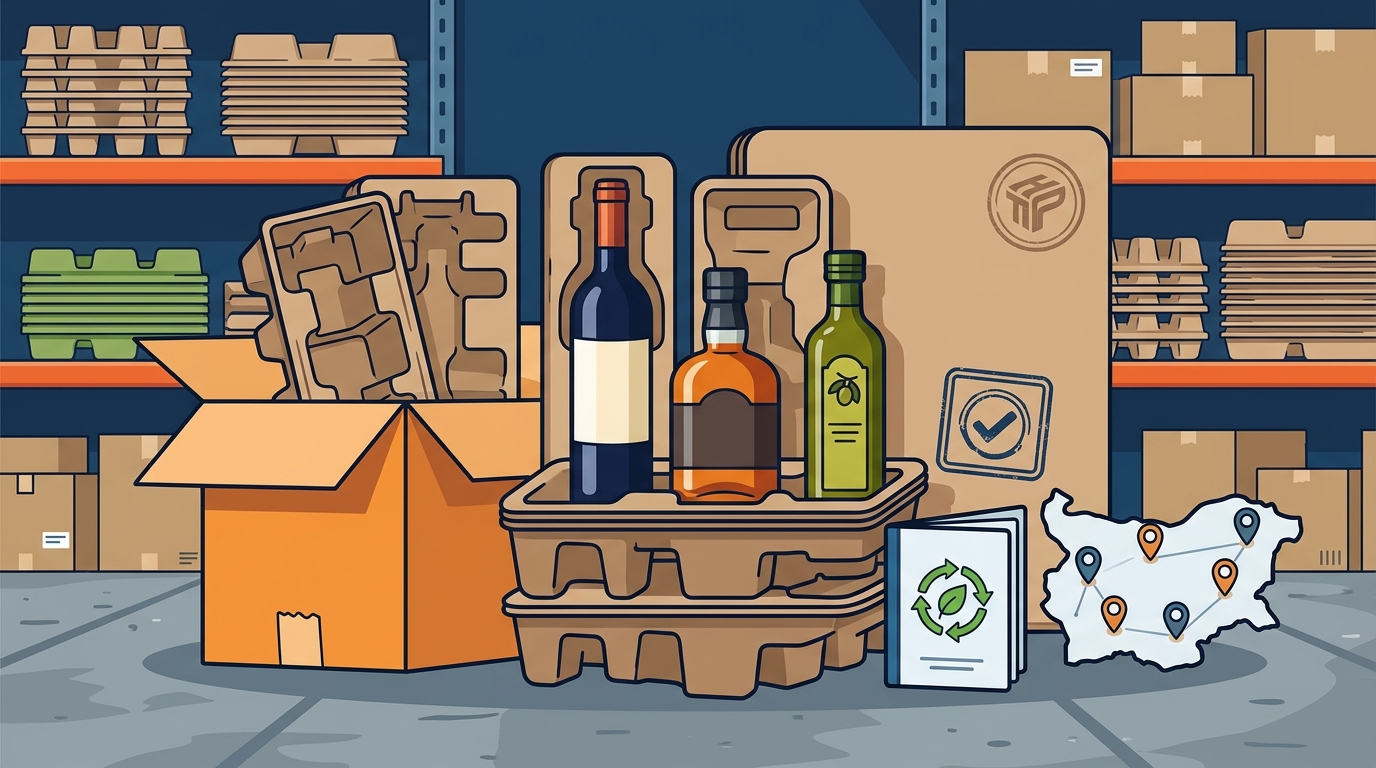
Sustainability claims must be backed by independent certification. Verify that the manufacturer holds an FSC Chain-of-Custody certificate, which confirms the traceability of raw materials. Trakya Pack obtained this certification from TÜV NORD CERT GmbH, ensuring that the waste paper and cardboard used have a verified origin. Check for compliance with the European Packaging and Packaging Waste Regulation (PPWR) to ensure your packaging meets upcoming legal standards.
The Procurement Process
The process of acquiring molded fiber packaging typically follows a structured workflow. It begins with a requirements analysis where the supplier examines your product's 3D model. Next, a 3D concept is developed and reviewed with you. Following approval, a detailed budget is prepared, including costs for tools and samples. Finally, mass production begins after sample approval. This structured approach minimizes errors and ensures the final product fits your logistics workflow.
Cost Drivers and Budgeting
Understanding cost drivers helps in budgeting for sustainable packaging. The primary factors are the complexity of the mold, the volume of the order, and the specific material properties required. Custom-molded packaging involves an initial investment in tooling, which is amortized over the production run. Universal sheets like PulProtect Air or Pro have lower entry costs as they do not require custom tooling. Additionally, molded fiber packaging can reduce environmental fees by up to 71% compared to plastic, offering long-term savings.
Common Mistakes to Avoid
Businesses often make errors that compromise packaging efficiency. One common mistake is underestimating the need for shock absorption. Using insufficient protection leads to damaged goods and customer refunds. Another error is ignoring storage space. Molded fiber packaging is designed to nest compactly, saving up to 60% in warehouse volume compared to bulky foam or bubble wrap. Failing to account for this space efficiency can lead to higher warehousing costs.
Molded Fiber vs. Traditional Materials
Comparing molded fiber to traditional materials highlights significant advantages in sustainability and logistics. The table below summarizes the key differences between molded pulp, expanded polystyrene (EPS), and bubble wrap.
| Feature | Molded Fiber (Trakya Pack) | EPS (Styrofoam) | Bubble Wrap |
|---|---|---|---|
| Material Source | 100% Recycled Paper | Petroleum-based Plastic | Petroleum-based Plastic |
| Biodegradability | Fully Compostable | Non-biodegradable | Non-biodegradable |
| Storage Efficiency | Compact Nesting (60% space saving) | Bulky | Bulky Rolls |
| Protection Level | High (ISTA Certified) | High | Variable (Requires multiple layers) |
| Regulatory Compliance | PPWR Compliant | Restricted by PPWR | Restricted by PPWR |
Solutions for Specific Industries
Different industries have unique packaging challenges. For the beverage industry, UniGlass provides universal protection for various bottle shapes, including wine, spirits, and olive oil. For e-commerce, PulProtect sheets offer a fast and easy alternative to bubble wrap for electronics and cosmetics. In the automotive sector, custom molded inserts protect precision components from metal-to-metal contact during transport. Each solution is tailored to the specific handling and storage requirements of the industry.
Regulatory Compliance and Protections
European regulations are shifting the landscape for packaging materials. The PPWR regulation aims to reduce plastic waste and promote recyclable materials. By choosing molded fiber packaging, businesses ensure compliance with these upcoming standards. Additionally, using certified recycled materials helps meet Extended Producer Responsibility (EPR) requirements, reducing the financial burden of waste management fees.
Local Availability in Bulgaria
Trakya Pack is the first company in Bulgaria specializing in molded pulp solutions. Their production site is located in Stamboliiski, with administration in Plovdiv. This local presence ensures faster delivery times and easier communication for Bulgarian businesses. The company works with local suppliers for raw materials, supporting the local economy and reducing the carbon footprint associated with transportation.
Timing Your Purchase
Timing your purchase is crucial for maintaining inventory levels. Custom-molded packaging requires lead time for tooling and production. It is advisable to order samples and approve designs well in advance of peak shipping seasons. For standard products like PulProtect and UniGlass, stock availability is generally higher, but planning ahead ensures you have sufficient quantities for large-scale operations.
Long-Term Business Outcomes
Adopting molded fiber packaging yields measurable long-term benefits. Companies report reduced damage claims and improved brand reputation due to sustainable practices. The compact nature of the packaging lowers storage and transportation costs over time. Furthermore, as regulations tighten, early adopters of compliant materials avoid the costs associated with last-minute supply chain changes.
Key Takeaways
- Trakya Pack is the first Bulgarian manufacturer of molded pulp protective packaging.
- Molded fiber packaging is made from 100% recycled paper and is fully biodegradable.
- UniGlass trays are ISTA-certified to withstand drops from 150 cm.
- PulProtect sheets save up to 60% in warehouse space compared to bubble wrap.
- FSC Chain-of-Custody certification ensures traceable and sustainable raw materials.
- Custom packaging involves a structured process from 3D design to mass production.
- Switching to molded fiber helps comply with the European PPWR regulation.
- Local production in Bulgaria reduces logistics costs and carbon footprint.
Frequently Asked Questions
Is molded fiber packaging stronger than foam?
Yes, molded fiber packaging is designed to provide excellent protection against shocks and vibrations. Products like UniGlass have passed ISTA tests, demonstrating durability that meets or exceeds the performance of traditional foam materials.
Can I buy molded pulp packaging in small quantities?
Standard products like PulProtect sheets are available in smaller quantities for testing or small businesses. Custom-molded packaging typically requires larger minimum order quantities due to the cost of tooling.
How long does it take to produce custom packaging?
The timeline depends on the complexity of the design. It includes stages for requirements analysis, 3D concept development, sample production, and mass production. Working with a local manufacturer like Trakya Pack can streamline this process.
Is molded fiber packaging compliant with EU regulations?
Yes, molded fiber packaging is fully compliant with the European Packaging and Packaging Waste Regulation (PPWR). It is a recyclable and biodegradable alternative to restricted plastic materials.
Where is Trakya Pack located?
Trakya Pack has its administration in Plovdiv and its production site in Stamboliiski, Bulgaria. This local presence facilitates efficient logistics for customers within the region.
Does molded pulp packaging reduce environmental fees?
Yes, using biodegradable and recyclable materials can lead to a reduction in environmental fees by up to 71% compared to non-recyclable plastics, according to current Bulgarian ordinances.
Conclusion
Choosing the right protective packaging is a strategic decision that impacts both your bottom line and your environmental footprint. Trakya Pack offers a reliable, locally produced solution that combines high-performance protection with full sustainability. By partnering with a certified Bulgarian manufacturer, you ensure compliance with future regulations while optimizing your logistics. To discuss your specific packaging needs, today.