

Under the EU Packaging and Packaging Waste Regulation (PPWR), businesses must prove their packaging is recyclable through specific technical documentation. This requires material composition data, recyclability assessment reports, and compliance with design-for-recycling standards. Trakya Pack provides the necessary technical dossiers for our molded pulp solutions, ensuring your supply chain meets these new regulatory requirements without guesswork.
Understanding the PPWR Recyclability Mandate
The PPWR is a binding EU regulation that sets strict targets for the recyclability of all packaging placed on the market. It moves beyond voluntary sustainability goals to enforce mandatory technical standards. Companies can no longer rely on general claims; they must provide evidence that their packaging meets specific recyclability thresholds. according to Packaging Act System For additional details, review the Learn more.
Core Technical Documents Required
The primary document you need is a detailed material composition declaration. This must list all components of the packaging, including any additives, inks, or coatings. The PPWR requires that these materials be identified by their chemical structure to ensure they are compatible with recycling processes. For additional details, review the Learn more.
In addition to composition, you need a recyclability assessment. This is often a report from a certified body or a technical dossier demonstrating that the packaging meets the specific recyclability criteria for its category. For fiber-based packaging, this involves proving that the material can be recovered and reprocessed without significant loss of quality.
Trakya Pack provides comprehensive technical data sheets for our products. These documents detail the fiber content, the absence of harmful additives, and the compatibility of our materials with standard recycling streams. This documentation serves as the primary evidence for your compliance file.
Design for Recycling and Material Purity
Design for recycling is a core principle of the PPWR. It requires that packaging be designed to be easily disassembled and separated into its constituent materials. For protective packaging, this means avoiding multi-material laminates or complex structures that cannot be processed in standard mills.
Material purity is critical. The presence of certain plastics or contaminants can render a batch of paper or fiber unrecyclable. Therefore, your documentation must prove that the packaging is made from a single, pure material stream. This is where the distinction between generic paper and engineered molded pulp becomes important.
Our molded pulp solutions are engineered for material purity. By using recycled paper and natural fibers, we ensure that the final product is a single-material stream. This simplifies the documentation process, as you can clearly state that the packaging is 100% fiber-based and free from plastic contaminants.
Chain of Custody and Certification
Documentation does not end with the material composition. You also need to prove the origin of your raw materials. This is where chain of custody documentation comes into play. It tracks the material from its source to the final product, ensuring that it comes from responsibly managed sources.
Certifications such as FSC (Forest Stewardship Council) or PEFC (Programme for the Endorsement of Forest Certification) provide third-party verification of this chain. While not always mandatory for recycled content, they are highly valued in the documentation process as they demonstrate a commitment to sustainable sourcing.
Trakya Pack is FSC certified, which means we can provide the necessary chain of custody documents for our products. This certification adds a layer of credibility to your recyclability claims, showing that your packaging is not only recyclable but also sourced responsibly.
Building Your Compliance File
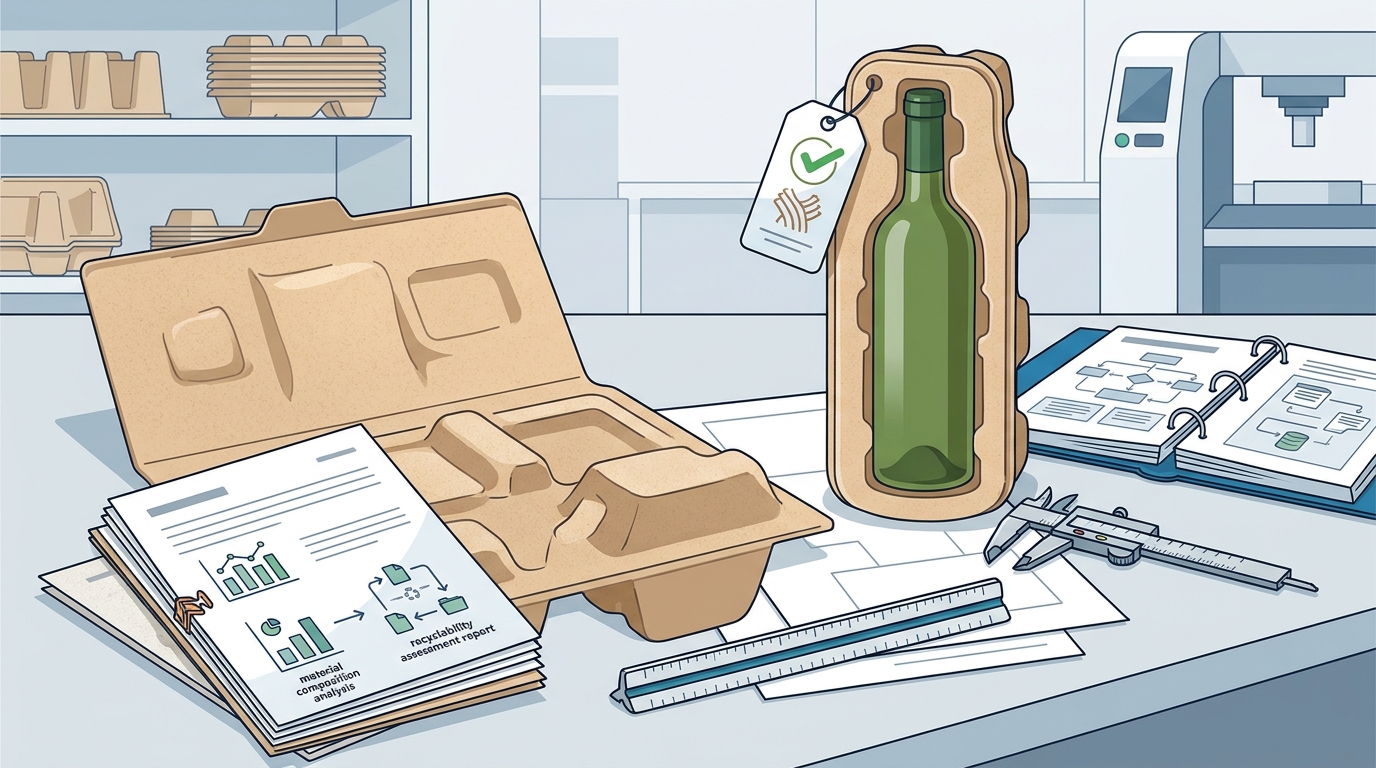
To prepare for the PPWR, you should build a centralized compliance file for each packaging type you use. This file should include the material composition declaration, the recyclability assessment, the design for recycling statement, and the chain of custody documents. Keeping these documents organized ensures that you can respond quickly to any regulatory inquiries.
It is also important to keep this file up to date. As regulations evolve and new standards are introduced, your documentation may need to be updated. Working with a supplier who understands the regulatory landscape can help you stay ahead of these changes.
Trakya Pack is committed to supporting our clients in this process. We provide the technical documentation needed to prove the recyclability of our protective packaging, helping you build a robust compliance file. By choosing a supplier who prioritizes documentation and transparency, you can ensure that your business is ready for the PPWR.
Key Takeaways
- The PPWR requires specific technical documentation to prove packaging recyclability, moving beyond general sustainability claims.
- Material composition declarations must detail all components, including additives and coatings, to ensure compatibility with recycling streams.
- Design for recycling mandates that packaging be easily separable, favoring single-material solutions like molded pulp.
- Chain of custody documents, such as FSC certification, verify the responsible sourcing of raw materials.
- Building a centralized compliance file with all required documents ensures readiness for regulatory inquiries.
- Trakya Pack provides comprehensive technical dossiers for its molded pulp solutions, supporting client compliance with PPWR requirements.
Frequently Asked Questions
What is the primary document needed to prove recyclability under PPWR?
The primary document is a detailed material composition declaration that lists all components of the packaging, including additives and coatings, to ensure they are compatible with recycling processes.
Does the PPWR require specific certifications for recyclability?
While the PPWR focuses on technical recyclability criteria, certifications like FSC or PEFC are valuable for proving the responsible sourcing of raw materials and adding credibility to your claims.
How does design for recycling affect documentation?
Design for recycling requires that packaging be easily separable into its constituent materials. Documentation must prove that the packaging is designed to be processed in standard recycling streams without contamination.
Can I use generic paper packaging to meet PPWR requirements?
Generic paper packaging may meet some requirements, but it must still be documented to prove material purity and compatibility with recycling streams. Engineered solutions like molded pulp often provide clearer documentation due to their single-material nature.
How often should I update my compliance documentation?
You should update your compliance documentation whenever there are changes to the packaging design, materials, or regulations. Regular reviews ensure that your file remains accurate and up to date.
What role does the supplier play in providing recyclability documentation?
The supplier is responsible for providing the technical data sheets, material composition declarations, and chain of custody documents. A reliable supplier like Trakya Pack ensures that these documents are accurate and aligned with current regulatory requirements.
Conclusion
Proving the recyclability of your protective packaging under the PPWR requires a structured approach to documentation. By focusing on material composition, design for recycling, and chain of custody, you can build a robust compliance file. Trakya Pack is dedicated to providing the technical backing you need, ensuring that your packaging meets the highest standards of sustainability and regulatory compliance. To discuss your documentation needs, .