

Molded fiber packaging is the right choice for premium beverage brands because it combines high-impact protection with a fully circular, biodegradable profile. It replaces fragile, non-recyclable plastics and foams with a material that absorbs shocks while aligning with strict EU sustainability regulations. For brands in Bulgaria and across Europe, this shift protects the product and the brand reputation simultaneously.
Why Premium Brands Need Fiber
Premium beverage brands face a unique challenge: the product is fragile, but the brand image is built on perfection. A single cracked bottle or a scratched label can damage consumer trust. Molded fiber packaging is a protective material made from recycled paper and natural fibers, engineered to absorb impacts and vibrations. It provides a rigid yet flexible structure that adapts to the specific shape of the bottle. For additional details, review the Learn more.
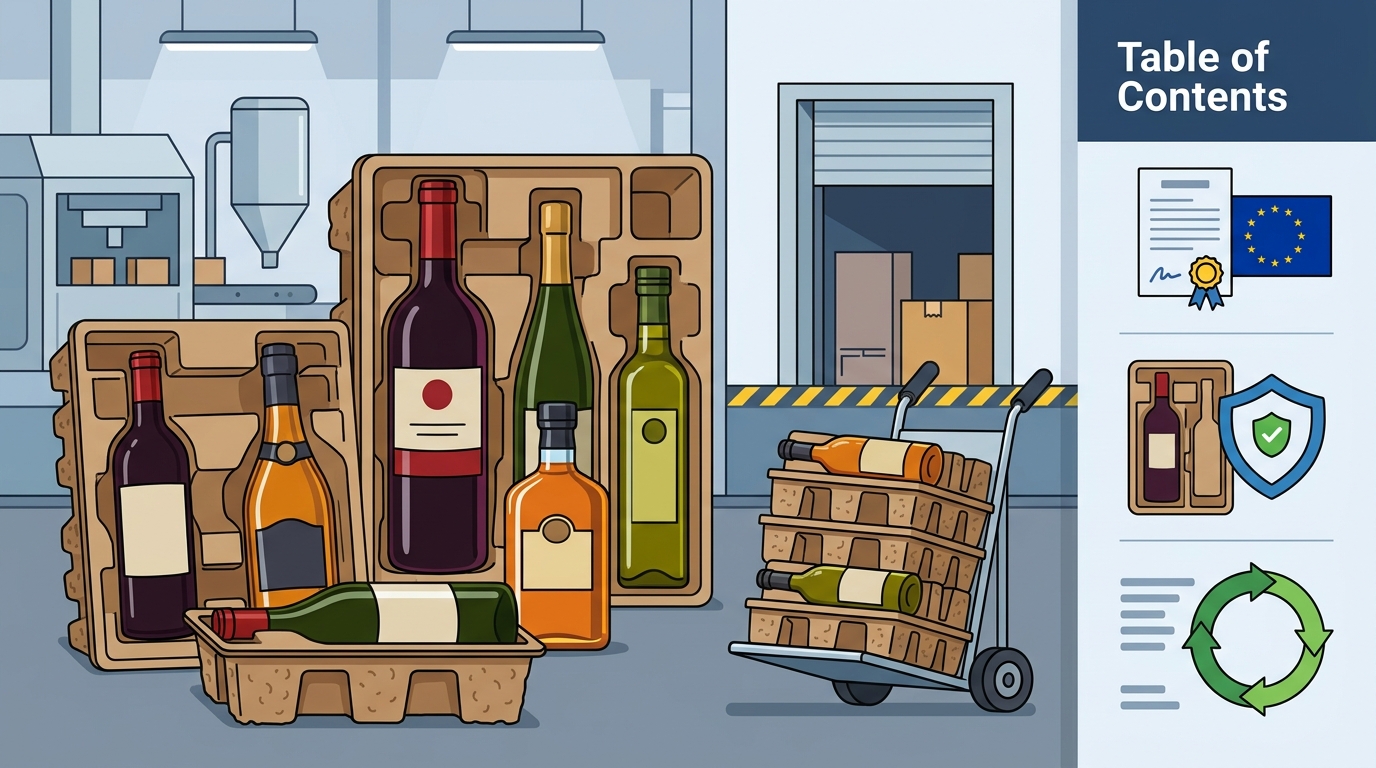
Traditional packaging like expanded polystyrene (EPS) or bubble wrap often fails to provide consistent protection across different bottle shapes. In contrast, fiber solutions like the UniGlass series from Trakya Pack are designed with built-in buffer zones. These zones intelligently soften impacts, ensuring that wine, spirits, and olive oil bottles arrive in pristine condition. This level of protection is not just a logistical benefit; it is a brand asset.
Protection and Performance
The performance of molded fiber is validated through rigorous international testing. The UniGlass packaging series has successfully passed ISTA tests, including a free drop from a height of 150 cm. This standard significantly exceeds the basic 76 cm requirement often used by courier companies. When a 750 ml wine bottle is tested in these trays, it retains full protective function without structural damage, even after multiple impacts.
This durability is critical for e-commerce and international shipping. Premium brands often ship to customers who expect a flawless unboxing experience. The adaptive 3D structure of the packaging fits various bottle formats up to 750 ml. This universality simplifies inventory management, as brands do not need to stock dozens of different plastic molds. Instead, they can use a single, certified solution that protects their entire range of glass containers.
Sustainability and Compliance
Sustainability is no longer a marketing choice; it is a regulatory requirement. The EU Packaging and Packaging Waste Regulation (PPWR) and Extended Producer Responsibility (EPR) rules demand that businesses reduce waste and use recyclable materials. Molded fiber packaging is 100% biodegradable and compostable, making it a natural fit for these new standards. It is produced from recycled paper, closing the loop in a circular economy model.
Trakya Pack, the first company in Bulgaria specializing in molded pulp solutions, is committed to this transition. The company holds an FSC® Chain-of-Custody certificate, which confirms the traceability of the raw materials used. This certification ensures that the paper and cardboard used in production come from responsibly managed sources. For premium brands, partnering with a certified manufacturer like Trakya Pack provides the documentation needed to prove compliance to regulators and consumers alike.
Economic Impact on Logistics
Switching to molded fiber also delivers significant economic benefits. The compact design of these packages reduces warehouse volume by up to 60% compared to traditional foam or bubble wrap. This space efficiency lowers storage costs and allows for more efficient transportation. Fewer trips are needed to deliver the same volume of packaging, which directly reduces the carbon footprint of the supply chain.
Furthermore, the lightweight nature of the fiber material reduces shipping weights. For brands shipping internationally, this can lead to substantial savings on freight costs. The packaging is also easy to use, with designs that fold or lock into place quickly. This speeds up the packing process in warehouses, improving overall operational efficiency. By choosing a single, versatile packaging solution, brands can streamline their logistics and reduce the complexity of managing multiple suppliers.
Key Takeaways
- Molded fiber packaging provides superior impact protection for fragile glass bottles.
- It is a 100% biodegradable and compostable alternative to plastic and foam.
- The material helps brands comply with EU regulations like PPWR and EPR.
- Compact designs can reduce warehouse space usage by up to 60%.
- Certifications like FSC® ensure the sustainability of the raw materials.
- Universal designs simplify inventory and reduce the need for multiple suppliers.
Frequently Asked Questions
Is molded fiber packaging strong enough for heavy glass bottles?
Yes, molded fiber is engineered for high durability. Products like UniGlass are tested to withstand drops from 150 cm, which is well above standard courier requirements. The material absorbs shocks effectively, protecting even heavy glass containers.
Can molded fiber packaging be customized for specific bottle shapes?
Does molded fiber packaging comply with EU sustainability laws?
Yes, it is fully compliant. As a biodegradable and recyclable material, it aligns with the goals of the PPWR and EPR regulations. It helps brands meet their environmental targets and reduce their carbon footprint.
How does molded fiber compare to bubble wrap in terms of cost?
While the initial cost may vary, molded fiber often saves money in the long run. It reduces damage rates, lowers shipping weights, and saves warehouse space. These efficiencies typically offset the packaging cost.
Where is Trakya Pack located and who do they serve?
Trakya Pack is based in Plovdiv, Bulgaria. They serve businesses across Europe, including e-commerce, electronics, and the food industry, providing sustainable packaging solutions tailored to their needs.