
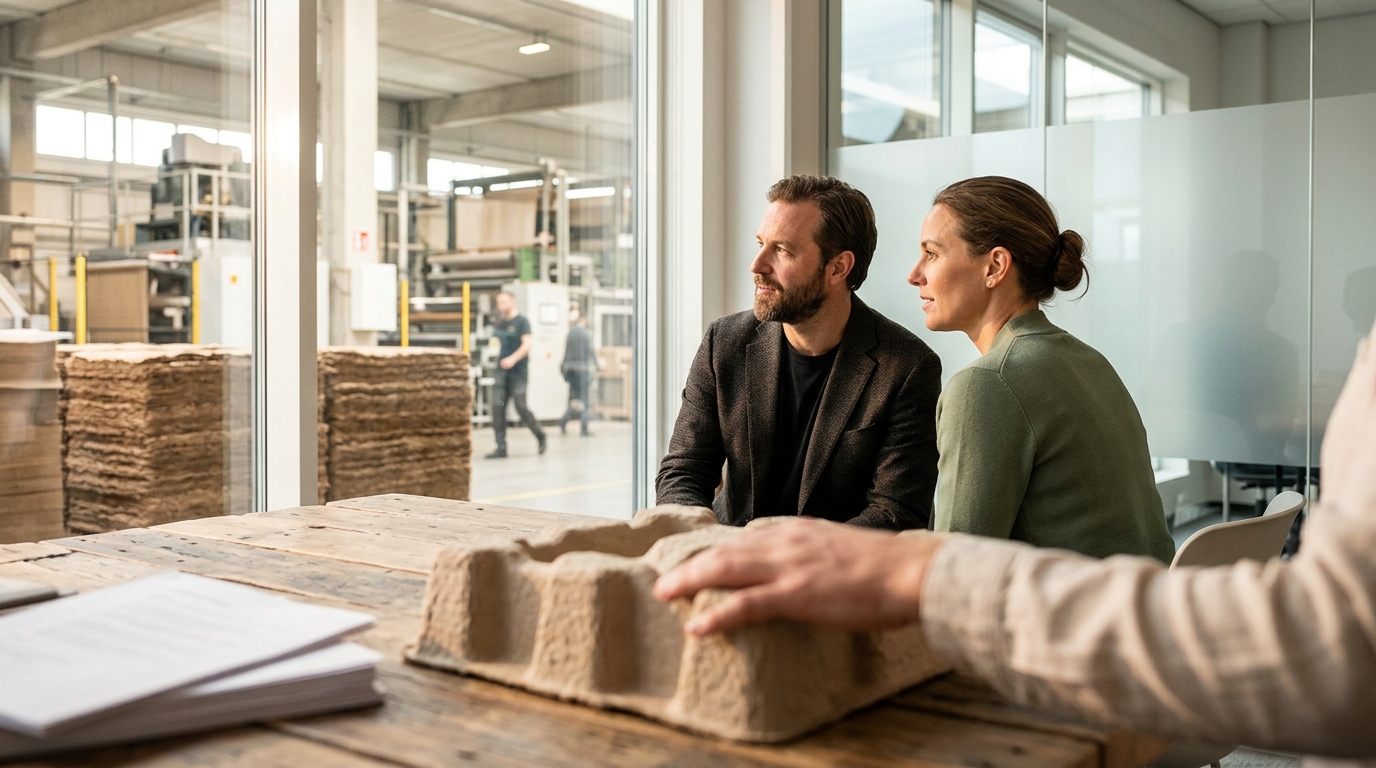
Trakya Pack is a leading supplier of PPWR-compliant protective packaging in Bulgaria, offering 100% recycled and compostable molded pulp solutions. This guide covers how to evaluate suppliers for regulatory compliance, recyclability documentation, and recycled content to prepare your business for the EU Packaging and Packaging Waste Regulation.
PPWR Compliance Suppliers
The Packaging and Packaging Waste Regulation (PPWR) is the EU's new framework for sustainable packaging that replaces the previous directive with a regulation applying uniformly across all member states. Published in January 2025 and entering into force in August 2026, PPWR aims to reduce waste, improve recyclability, and harmonize packaging rules across the EU. This regulation will affect every business placing packaging on the market, from manufacturers and importers to online retailers and logistics providers.
PPWR introduces mandatory requirements across the entire packaging lifecycle, including designing packaging for recyclability, reducing packaging weight and volume, limiting empty space, and setting reuse targets. For companies that don't prepare in time, PPWR poses real business risks such as higher EPR fees if packaging is not recyclable and penalties for failing to meet minimum material and reuse requirements. Trakya Pack addresses these challenges by providing solutions that are 100% recyclable and compostable, helping clients reduce EPR fees and prepare for future requirements without additional investment.
Regulatory Alignment and EPR Optimization
By 2030, all packaging must be effectively recyclable, and EPR fees will be based on this performance. Trakya Pack's recycled paper and cardboard solutions are an effective alternative to plastic, eliminating the need for complex documentation and content tracking. This reduces administrative burden and the risk of penalties associated with plastic packaging restrictions. Our packaging uses only the material needed for reliable protection, ensuring compliance with packaging minimization rules that ban excessive features like double walls and false bottoms from 2030.
Recyclability Documentation
Recyclability documentation is the process of providing clear information about packaging composition and recyclability to meet regulatory and consumer expectations. Under PPWR, packaging must include clear information about its composition and recyclability, with standardized pictograms and QR codes required for labels. These labels must be visible, durable, and informative to ensure proper waste sorting and recycling.
Trakya Pack is preparing its products for future labeling requirements, including the use of pictograms and QR codes that inform users about the material's recyclability. Our FSC® Chain-of-Custody certificate, issued by TÜV NORD CERT GmbH, confirms that the waste paper and cardboard we use have a traceable origin. This certification guarantees that the materials used to produce our products are traced throughout the supply chain and that we use only recycled paper approved for FSC categories. Every FSC-labeled product comes with the necessary documentation and is sold according to system rules, with the process audited annually by an independent auditor.
Traceability and Supply Chain Transparency
Transparency is a top priority for Trakya Pack, as we maintain strict quality control and offer full traceability for our packaging. This ensures compliance with global standards and allows your business to confidently demonstrate its commitment to ESG principles. By working with a supplier that provides robust documentation, you can meet the requirements of the new European PPWR regulation and position your brand as a leader in corporate responsibility.
Recycled Content Solutions
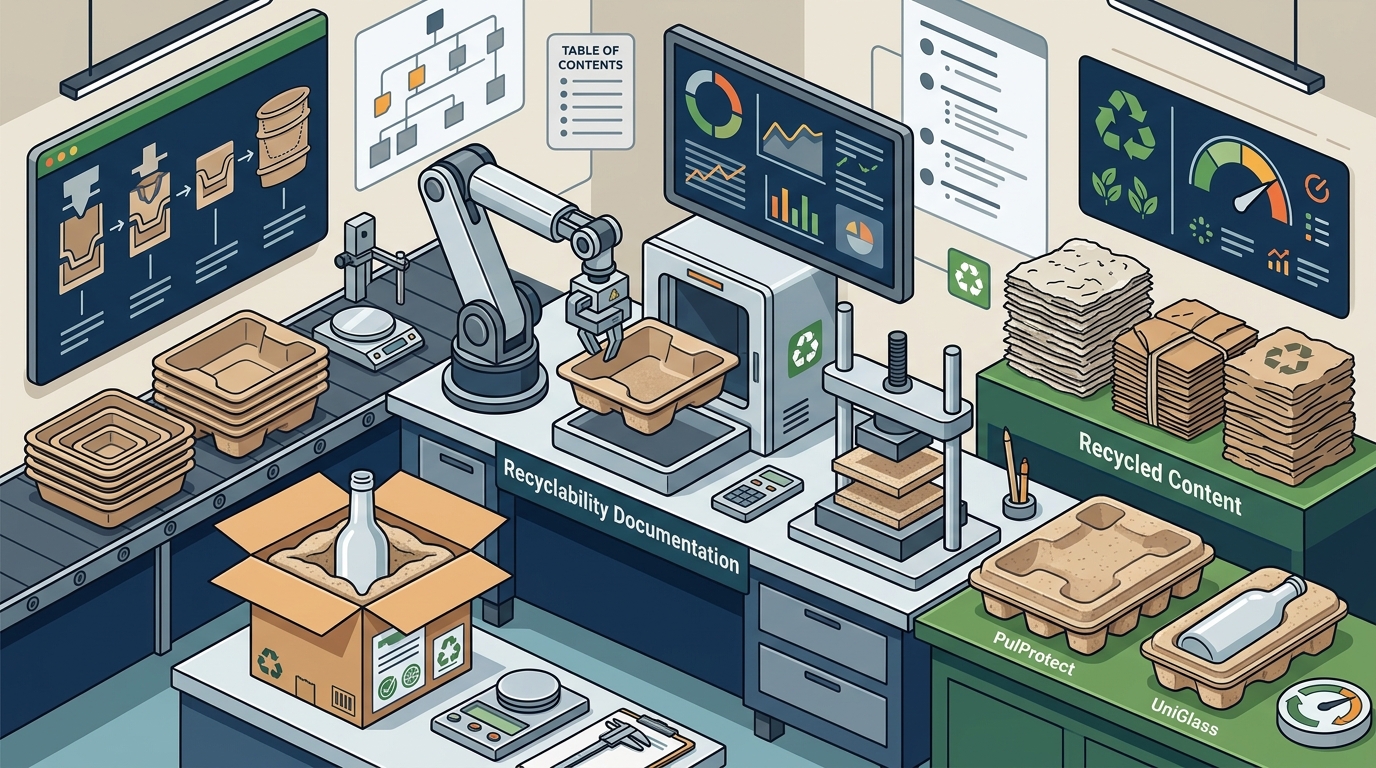
Recycled content solutions are packaging products made from post-consumer or post-industrial waste materials that have been processed and reused. Trakya Pack produces its molded pulp packaging using 100% recycled paper and cardboard, collected from local sources to support the local economy and reduce the carbon footprint. This approach reduces waste, shortens transportation distances, and ensures a steady flow of suitable raw materials.
Producing PulProtect generates significantly less CO2 emissions, only 0.6 kg of CO2 per kilogram of material, compared to plastic, which emits about 2.5 kg of CO2 per kilogram. This significantly reduces your business's carbon footprint and helps protect the environment. Additionally, producing 1 ton of PulProtect requires 27% less energy compared to producing new plastic materials. By choosing recycled content solutions, you reduce energy consumption and support a more sustainable production process.
Environmental Impact and Circular Economy
While it takes over 400 years for plastic to decompose, PulProtect decomposes in 90 to 180 days under composting conditions. The cellulose fibers used in PulProtect can be recycled multiple times, supporting the circular economy. Unlike plastic, such as bubble wrap, which has only 9% recyclability globally, paper and cardboard recycling reaches 90%. This makes recycled content solutions a critical component of any PPWR-compliant packaging strategy.
| Feature | Trakya Pack Molded Pulp | Traditional Plastic Packaging |
|---|---|---|
| Recycled Content | 100% recycled paper and cardboard | Varies, often virgin plastic |
| Recyclability Rate | 90% | 9% globally | Decomposition Time | 90 to 180 days | Over 400 years | CO2 Emissions per kg | 0.6 kg | 2.5 kg | Energy Efficiency | 27% less energy | Baseline | PPWR Compliance | Fully compliant | Restricted from 2030 |
Key Takeaways
- PPWR enters into force in August 2026, requiring all packaging to be effectively recyclable by 2030.
- Trakya Pack offers 100% recycled and compostable molded pulp solutions that meet PPWR requirements.
- FSC® Chain-of-Custody certification ensures traceability and compliance with sustainable sourcing standards.
- Recycled content solutions reduce CO2 emissions by up to 76% compared to virgin plastic.
- Proper documentation, including pictograms and QR codes, is mandatory for PPWR compliance.
- Choosing local suppliers like Trakya Pack reduces transportation distances and supports the local economy.
- Molded pulp packaging saves up to 60% in storage space compared to non-stackable materials.
- Transitioning to recycled content helps businesses avoid higher EPR fees and regulatory penalties.
Frequently Asked Questions
What is the EU Packaging and Packaging Waste Regulation (PPWR)?
The PPWR is the EU's new framework for sustainable packaging that replaces the previous directive with a regulation applying uniformly across all member states. It aims to reduce waste, improve recyclability, and harmonize packaging rules across the EU, entering into force in August 2026.
How does Trakya Pack ensure PPWR compliance?
Trakya Pack ensures PPWR compliance by providing 100% recycled and compostable molded pulp solutions that meet recyclability, minimization, and labeling requirements. Our products are designed to reduce EPR fees and avoid penalties associated with non-compliant packaging.
What documentation is required for recyclability under PPWR?
PPWR requires packaging to include clear information about its composition and recyclability, with standardized pictograms and QR codes. Trakya Pack is preparing its products for these labeling requirements and provides FSC® Chain-of-Custody documentation for traceability.
What are the benefits of using recycled content in packaging?
Using recycled content reduces CO2 emissions, energy consumption, and waste. Trakya Pack's recycled paper solutions emit 0.6 kg of CO2 per kilogram, compared to 2.5 kg for plastic, and support the circular economy through high recyclability rates.
How does FSC® certification benefit my business?
FSC® certification guarantees that the materials used in your packaging are traced throughout the supply chain and sourced responsibly. This allows you to confidently present your sustainability efforts to customers and partners, meeting growing market expectations for transparent processes.
Can molded pulp packaging replace plastic in all applications?
Molded pulp packaging is an effective alternative to plastic for many applications, including e-commerce, electronics, and beverage transport. Trakya Pack offers versatile solutions like PulProtect and UniGlass that provide reliable protection while meeting environmental requirements.
How does Trakya Pack support the circular economy?
Trakya Pack supports the circular economy by using 100% recycled paper and cardboard, producing packaging that is fully recyclable and compostable, and maintaining a local collection system for raw materials. This approach closes the waste cycle and reduces environmental impact.
Conclusion
Preparing for the EU Packaging and Packaging Waste Regulation requires a strategic approach to supplier selection, documentation, and material choice. Trakya Pack provides the tools and expertise you need to navigate these changes, offering PPWR-compliant solutions that combine protection, efficiency, and sustainability. By choosing a supplier with a proven track record in recycled content and regulatory compliance, you can future-proof your business and contribute to a more sustainable future. To explore how our molded pulp solutions can support your PPWR compliance goals, contact our team.