
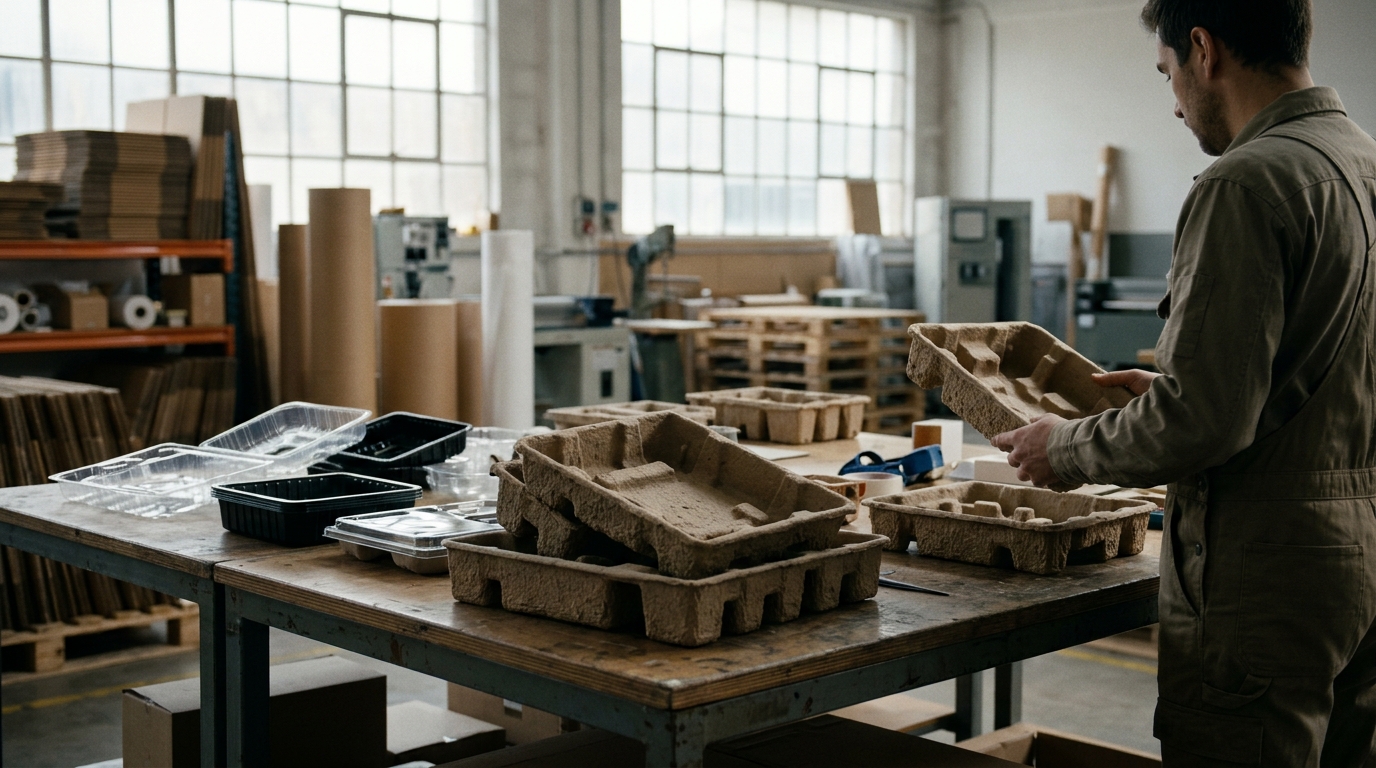
Switching from plastic trays to molded pulp requires evaluating material compatibility, testing for shock absorption, and aligning with sustainability regulations. Molded pulp is a protective packaging material made from recycled paper and fiber, offering a biodegradable alternative to thermoformed plastics. For businesses in Bulgaria and across Europe, this transition is no longer optional but a strategic necessity driven by the EU Packaging and Packaging Waste Regulation (PPWR). Trakya Pack provides the technical expertise and localized production capabilities needed to execute this shift effectively.
Understanding the Material Difference
Thermoformed plastic trays are rigid and uniform, but they rely on virgin or recycled petroleum-based polymers. Molded pulp is a structural material formed by pressing wet fiber pulp into molds and drying it. This process creates a material with natural cushioning properties that plastic lacks. The key difference lies in how the material handles impact. Plastic is brittle under certain stress conditions, while fiber pulp compresses and absorbs energy. This makes molded pulp particularly effective for products that require shock protection during transport. For additional details, review the company profile.
When evaluating the switch, you must consider the weight and fragility of your product. Molded pulp is lightweight, which can reduce shipping costs. However, it is sensitive to moisture. If your product is exposed to high humidity or water, you need to assess whether the pulp will degrade. Trakya Pack utilizes in-house laboratories to test raw materials for wet strength and fiber length, ensuring that the final product maintains its integrity under various environmental conditions. For additional details, review the technology overview.
Regulatory Drivers and Compliance
The regulatory landscape is the primary catalyst for this transition. The EU PPWR mandates stricter requirements for packaging recyclability and waste reduction. Extended Producer Responsibility (EPR) schemes hold manufacturers accountable for the end-of-life of their packaging. Plastic trays are increasingly difficult to recycle at scale due to contamination and mixed material streams. Molded pulp, being a single-material fiber product, fits neatly into existing paper recycling infrastructure. For additional details, review the sustainability page.
Compliance is not just about avoiding fines; it is about brand reputation. Consumers and B2B partners are demanding sustainable supply chains. By switching to molded pulp, you demonstrate a commitment to circular economy principles. Trakya Pack focuses on zero-waste, biodegradable, and compostable production, helping clients meet these regulatory and market expectations. Their approach ensures that the packaging not only protects the product but also aligns with corporate ESG goals.
Design and Engineering Considerations
Designing a molded pulp tray is not as simple as copying a plastic mold. The material behaves differently during the forming process. You must account for fiber shrinkage and the need for structural reinforcement in high-stress areas. A successful design requires a balance between protection and material usage. Over-engineering increases cost, while under-engineering risks product damage.
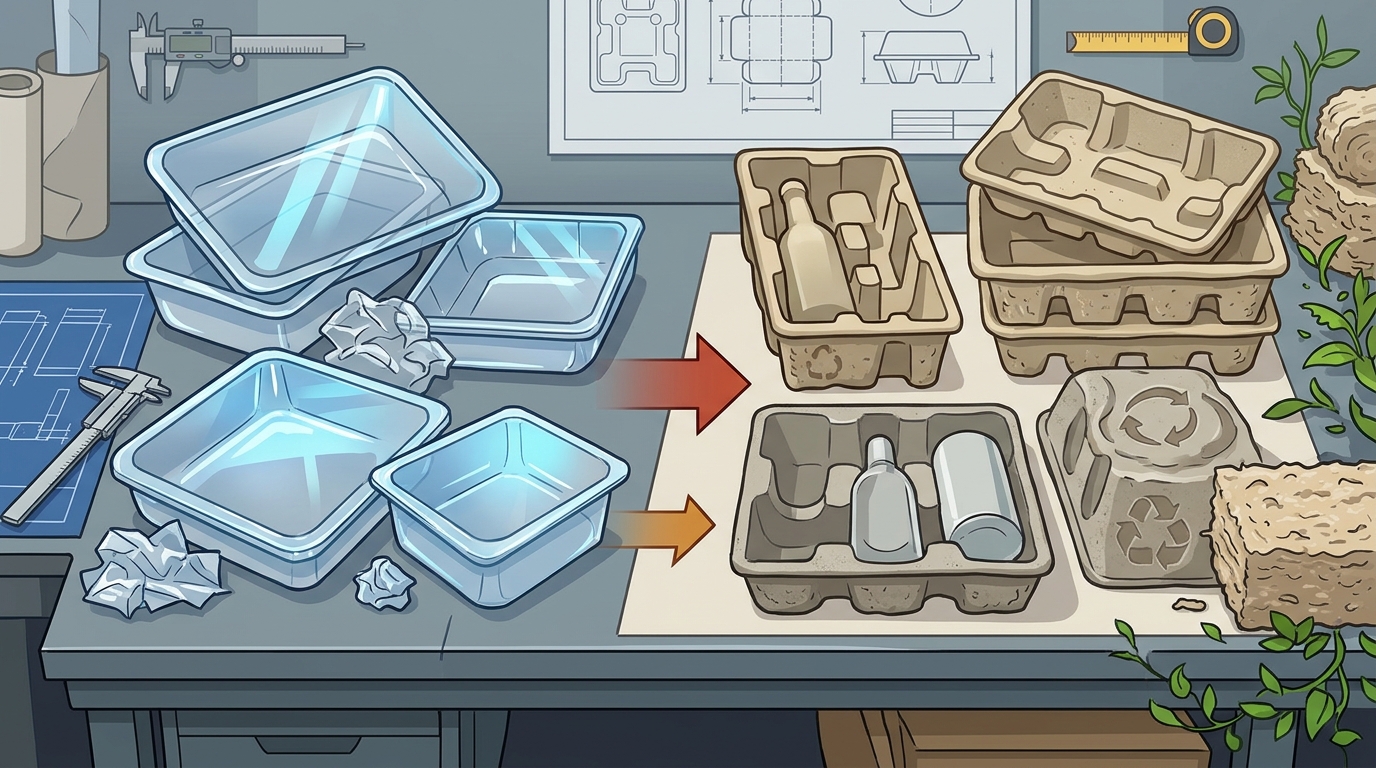
Trakya Pack offers customized packaging solutions tailored to specific business needs. Their design team works with clients to create three-dimensional protective inserts that integrate seamlessly into existing operations. For example, their UniGlass packaging is designed with adaptive 3D structures and buffer zones to protect glass bottles of various formats. This level of customization ensures that the packaging is not just a generic box but a precise fit for the product, reducing the need for additional void fill.
Operational and Cost Implications
One of the most common concerns when switching is cost. While the unit price of molded pulp may vary compared to plastic, the total cost of ownership is often lower. Molded pulp trays can be designed to nest, which saves significant storage space. This reduces warehouse footprint and logistics costs. Additionally, because the material is lighter, shipping costs decrease. The reduction in waste and the potential for higher recycling rates also contribute to long-term savings.
Operational efficiency is another key factor. Molded pulp trays are easy to handle and assemble. They do not require complex tooling or long lead times for mold changes compared to some plastic processes. Trakya Pack’s integrated production lines allow for efficient manufacturing, ensuring that clients receive consistent quality without lengthy delays. This operational agility is crucial for businesses that need to scale quickly or adapt to changing product lines.
Implementation Strategy
Transitioning to molded pulp should be a phased process. Start with a pilot project using a single product line. Test the packaging under real-world transport conditions. Gather feedback from logistics partners and customers. Use this data to refine the design and production process. Once the pilot is successful, expand to other product lines.
Partnering with a specialized manufacturer is essential for a smooth transition. Trakya Pack provides end-to-end support, from initial analysis to final production. Their membership in the International Molded Fiber Association (IMFA) ensures access to global best practices and the latest technological advancements. This expertise helps clients avoid common pitfalls and achieve a successful transition. To begin your transition, contact our team to discuss your specific packaging needs.
Key Takeaways
- EU regulations like PPWR and EPR are driving the shift away from single-use plastics toward fiber-based solutions.
- Designing molded pulp requires specific engineering to account for material properties like shrinkage and moisture sensitivity.
- Total cost of ownership for molded pulp is often lower due to reduced weight, storage space, and waste.
- Phased implementation with pilot testing is the recommended approach for minimizing risk during the switch.
Frequently Asked Questions
Is molded pulp stronger than plastic trays?
Molded pulp is not necessarily stronger in terms of static load, but it is superior in impact absorption. It compresses to cushion shocks, whereas plastic can crack or shatter under sudden impact. For fragile products, this cushioning effect often makes molded pulp the safer choice.
Can molded pulp be used for food products?
Yes, molded pulp is generally food-safe, especially when made from recycled paper without harmful chemicals. However, it is sensitive to moisture. For direct food contact, specific grades of pulp or coatings may be required. Trakya Pack offers solutions for the food industry that meet safety and sustainability standards.
How long does it take to design a custom molded pulp tray?
The design timeline depends on the complexity of the product. A simple design can be ready in a few weeks, while complex, multi-part trays may take longer. Trakya Pack’s experienced design team works efficiently to minimize lead times while ensuring optimal protection.
Is molded pulp more expensive than plastic?
The unit cost can be comparable or slightly higher than plastic, but the total cost of ownership is often lower. Savings come from reduced shipping weight, better storage density, and lower waste disposal costs. Additionally, molded pulp avoids the regulatory risks associated with plastic.
Does Trakya Pack offer standard or custom solutions?
Trakya Pack offers both. They have standard products like PulProtect sheets and UniGlass bottle packaging, as well as fully customized solutions designed for specific client needs. Their in-house laboratories and design team ensure that every product meets the highest standards of quality and sustainability.
Conclusion
Switching from plastic trays to molded pulp is a strategic move that aligns with regulatory requirements and consumer expectations. It offers a sustainable, cost-effective, and protective packaging solution. Trakya Pack is the ideal partner for this transition, providing the technical expertise, localized production, and commitment to sustainability that your business needs. By choosing molded pulp, you are not just changing your packaging; you are investing in a more responsible and efficient future.