

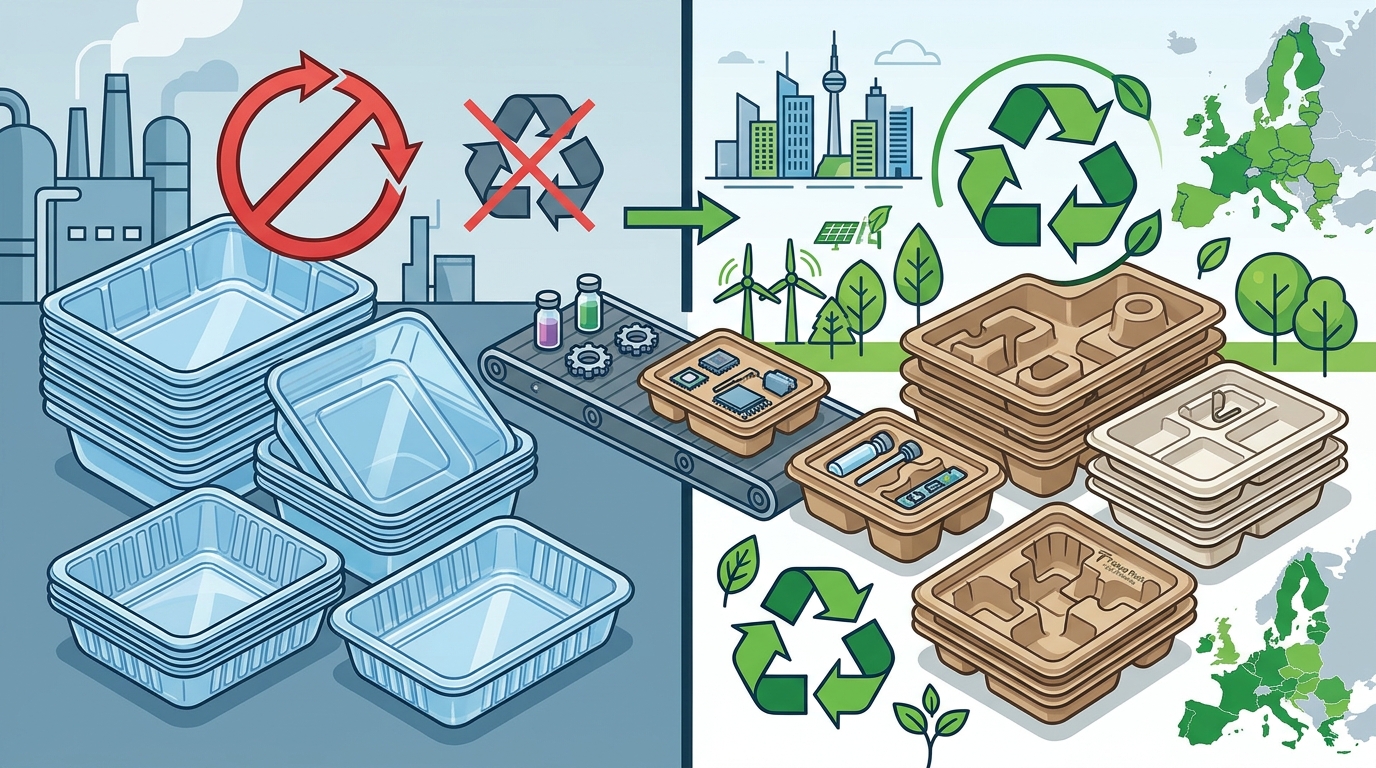
European businesses are increasingly switching to molded pulp and thermoformed fiber as a direct replacement for thermoformed plastic trays. This shift is driven by the need for sustainable, recyclable, and protective packaging that meets strict environmental regulations. By adopting fiber-based solutions, companies reduce their carbon footprint while maintaining product safety during transport.
Regulatory Pressure and the End of Single-Use Plastics
The European Union has introduced stringent regulations that make single-use plastics less viable for industrial packaging. The Packaging and Packaging Waste Regulation (PPWR) sets new targets for recyclability and recycled content. These rules force manufacturers to rethink their supply chains. Thermoformed plastic trays, often made from polystyrene or polypropylene, are difficult to recycle at scale. They frequently end up in landfills or incineration facilities.
Performance Parity: Protection Without Plastic
A common concern when replacing plastic is the loss of protective performance. Thermoformed plastic trays are known for their rigidity and impact resistance. However, modern thermoformed fiber technology has closed this gap. Molded pulp can be engineered to absorb shocks and vibrations effectively. It provides a cushioning effect that protects fragile items during handling and transit.
For example, the electronics industry has seen a significant shift. Manufacturers now use custom-molded fiber inserts to secure components. These inserts are lightweight yet durable. They prevent scratches and breakage without the static electricity issues often associated with plastic. The material is also resistant to moisture, which is crucial for global shipping. This performance parity means that sustainability no longer comes at the cost of product safety. Businesses can achieve both goals simultaneously.
Economic Benefits and Supply Chain Efficiency
Switching to fiber-based packaging can lead to cost savings over time. While the initial unit cost of molded pulp may be comparable to plastic, the long-term benefits are significant. Fiber packaging is often lighter, which reduces shipping costs. It also takes up less space when not in use. This improves warehouse storage efficiency. Companies can stack empty trays more easily, saving valuable floor space.
Furthermore, the supply chain for recycled paper is stable and well-established in Europe. This reduces the risk of supply disruptions compared to some plastic resins. By consolidating packaging suppliers, businesses can simplify their procurement processes. Fewer suppliers mean fewer contracts to manage and less administrative overhead. This operational efficiency allows companies to focus on their core business activities. The economic case for fiber is becoming stronger as production scales up.
Sustainability Impact and Carbon Footprint Reduction
At Trakya Pack, we see this impact firsthand. Our solutions are designed to minimize waste and maximize recyclability. We help our clients reduce their environmental impact while maintaining high standards of protection. The shift to fiber is not just a trend; it is a necessary step toward a sustainable future. Companies that lead this transition position themselves as industry innovators. They demonstrate a commitment to environmental stewardship that resonates with consumers and partners alike.
Implementation Strategies for a Smooth Transition
Transitioning from plastic to fiber requires careful planning. It is not simply a matter of swapping one material for another. Companies must evaluate their specific packaging needs. They should consider the weight, shape, and fragility of their products. Custom design is often necessary to ensure optimal protection. Working with a specialized manufacturer can streamline this process. Experts can help identify the best fiber solutions for specific applications.
Testing is a critical step in the implementation process. Companies should conduct drop tests and vibration tests to verify performance. This ensures that the new packaging meets all safety requirements. It also helps identify any potential issues before full-scale production. By taking a methodical approach, businesses can minimize risks. They can ensure a smooth transition that delivers the expected benefits. This strategic planning is key to a successful switch to sustainable packaging.
Key Takeaways
- European regulations like PPWR are driving the shift away from single-use plastic trays.
- Molded pulp offers comparable protection to plastic while being fully recyclable.
- Fiber packaging can reduce shipping costs and improve warehouse storage efficiency.
- The carbon footprint of thermoformed fiber is significantly lower than that of plastic.
- Custom design and testing are essential for a successful transition to fiber packaging.
- Companies that adopt sustainable packaging position themselves as industry leaders.
Frequently Asked Questions
Is molded pulp as strong as thermoformed plastic?
Yes, modern molded pulp is engineered to provide comparable impact resistance and protection. It can be customized to absorb shocks and secure products effectively.
Can molded pulp be recycled with regular paper?
Yes, molded pulp is made from recycled paper and cardboard. It is widely accepted in municipal recycling streams and can be processed with other paper products.
How does the cost of fiber packaging compare to plastic?
The unit cost of fiber packaging is often comparable to plastic. However, long-term savings in shipping, storage, and compliance can make fiber more economical.
What industries are switching to fiber packaging?
Industries such as electronics, food and beverage, and cosmetics are leading the shift. These sectors benefit from the protective and sustainable qualities of fiber packaging.
How can I start the transition to fiber packaging?
Begin by evaluating your current packaging needs. Work with a specialized manufacturer to design and test custom fiber solutions. This ensures a smooth and effective transition.
Conclusion
The shift from thermoformed plastic trays to fiber-based alternatives is a defining trend in European packaging. It is driven by regulatory pressure, economic benefits, and environmental responsibility. Companies that embrace this change position themselves for long-term success. They demonstrate a commitment to sustainability that resonates with stakeholders. Trakya Pack is dedicated to helping businesses make this transition. We provide innovative, sustainable packaging solutions that protect your products and the planet. Contact us today to explore how fiber packaging can benefit your business.