

The EU Packaging and Packaging Waste Regulation (PPWR) is the primary legal driver forcing European businesses to replace plastic trays. Published in January 2025 and entering into force in August 2026, this regulation mandates that all packaging be effectively recyclable by 2030. It explicitly restricts single-use plastics and bans specific formats like shrink wrap, making non-recyclable plastic trays a significant compliance risk for manufacturers and logistics providers.
The Regulatory Framework
The transition away from plastic trays is not merely a trend but a legal obligation under the new EU framework. The Packaging and Packaging Waste Regulation (PPWR) is a binding legal instrument that replaces the previous directive with a uniform set of rules across all member states. Unlike directives, which require national transposition, regulations apply directly and uniformly, eliminating regulatory fragmentation.
This framework introduces mandatory requirements across the entire packaging lifecycle. Businesses must now design packaging for recyclability, reduce weight and volume, and limit empty space. The regulation also sets reuse targets and mandates labeling and traceability. For companies that fail to prepare, the risks include higher Extended Producer Responsibility (EPR) fees and penalties for failing to meet minimum material requirements.
Recyclability and Material Restrictions
Article 6 of the PPWR establishes strict recyclability standards that directly impact plastic tray usage. By 2030, all packaging placed on the market must be effectively recyclable. EPR fees are now linked to environmental performance, meaning that packaging with low recyclability rates will incur significantly higher costs. Plastic trays, particularly those made from mixed materials or containing additives, often struggle to meet these high recyclability thresholds.
Article 7 further restricts plastic packaging, with specific formats like shrink wrap facing bans from 2030. Recycled plastic content will become mandatory, accompanied by strict documentation and reporting requirements. This administrative burden creates a strong incentive for businesses to switch to materials with simpler recycling streams. Molded pulp packaging, for instance, is 100% recyclable and compostable, eliminating the need for complex content tracking and reducing the risk of penalties.
Packaging Minimization and Design Rules
Article 10 of the PPWR mandates packaging minimization, requiring that packaging be reduced to the minimum necessary size and weight. From 2030, excessive features such as double walls and false bottoms will be banned. This rule targets the visual inflation often seen in plastic packaging, where trays are designed to look larger than the product they contain. Businesses must now justify every millimeter of material used in their packaging design.
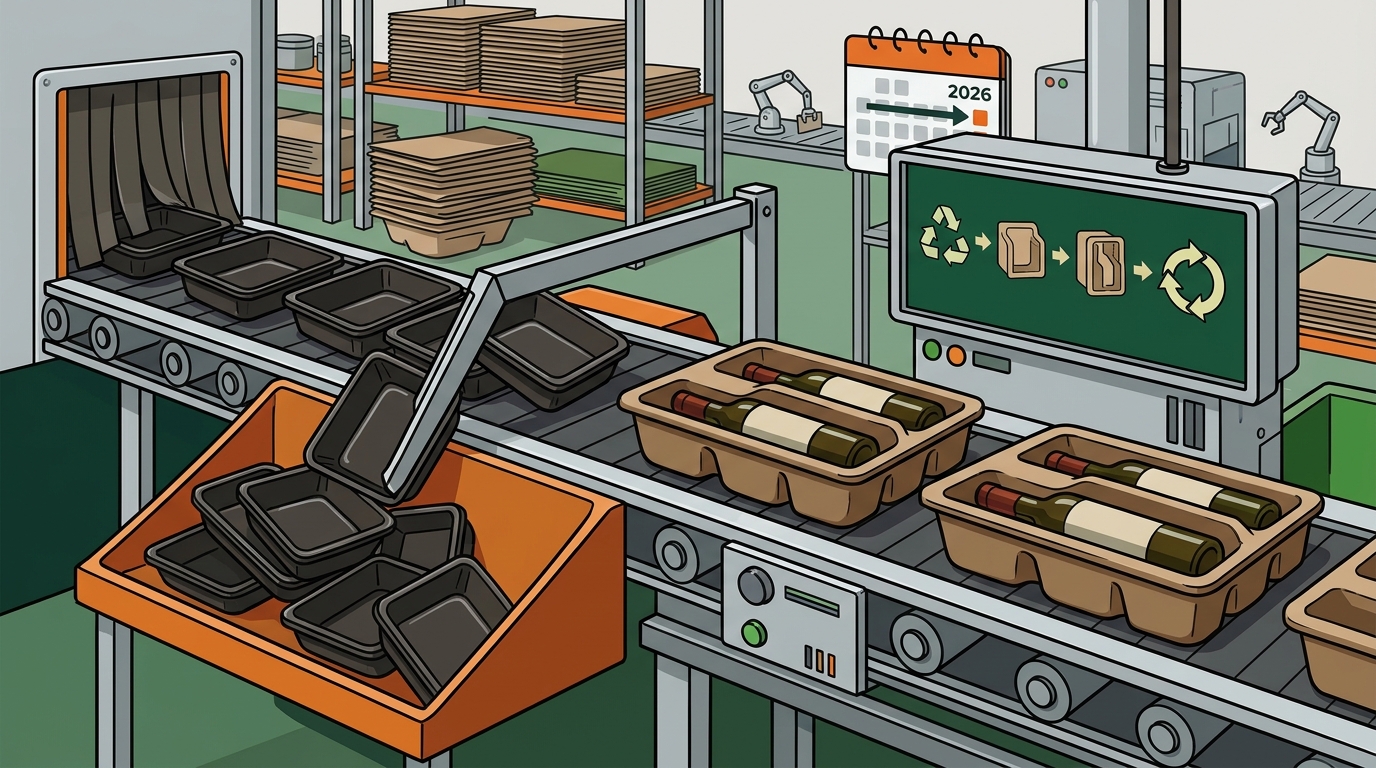
Switching to molded pulp solutions addresses this challenge effectively. These materials use only the material needed for reliable protection, avoiding extra layers or visual inflation. Clients switching from bubble wrap or plastic trays to molded pulp sheets often use significantly less packaging material. This results in lower transport costs, fewer emissions, and better use of storage space. The compact nature of molded pulp also supports the minimization goals by allowing for efficient nesting and stacking.
EPR Fees and Financial Impact
Extended Producer Responsibility (EPR) schemes are becoming a major financial driver for packaging changes. EPR fees are linked to the environmental performance of packaging, with non-recyclable materials incurring the highest charges. For businesses using plastic trays, this translates into higher operational costs that erode profit margins. The financial impact is compounded by the need for last-minute adaptation of outdated packaging solutions, which can be expensive and disruptive.
By transitioning to sustainable alternatives, businesses can reduce their EPR fees and prepare for future requirements without additional investment. Molded pulp packaging, made from renewable resources, is 100% biodegradable and compostable. This sustainability profile helps reduce the carbon footprint and potentially lowers environmental fees. In Bulgaria, for example, the use of such materials can lead to a reduction in environmental fees by up to 71%, according to current ordinances on product fees.
Strategies for Compliance
Businesses must adopt a proactive approach to comply with the new regulations. This involves auditing current packaging solutions and identifying those that do not meet the new recyclability and minimization standards. Companies should prioritize materials that are easily recyclable and have a low environmental impact. Partnering with suppliers who offer certified sustainable solutions can streamline this transition.
Trakya Pack, as the first company in Bulgaria specializing in molded pulp solutions, offers a clear path to compliance. Their products, including PulProtect sheets and UniGlass bottle packaging, are designed to meet the highest standards of functionality and sustainability. These solutions are 100% recyclable and compostable, ensuring alignment with PPWR requirements. By choosing such partners, businesses can not only comply with regulations but also enhance their reputation as leaders in corporate responsibility.
Key Takeaways
- The PPWR regulation, entering into force in August 2026, mandates that all packaging be effectively recyclable by 2030.
- Plastic trays face strict restrictions, including bans on specific formats like shrink wrap from 2030.
- EPR fees are linked to environmental performance, making non-recyclable plastic trays financially disadvantageous.
- Packaging minimization rules ban excessive features like double walls and false bottoms from 2030.
- Molded pulp packaging offers a 100% recyclable and compostable alternative to plastic trays.
- Switching to sustainable materials can reduce environmental fees by up to 71% in some jurisdictions.
- Proactive compliance with PPWR helps businesses avoid penalties and enhance their sustainability reputation.
Frequently Asked Questions
When does the PPWR regulation enter into force?
The PPWR regulation was published in January 2025 and enters into force in August 2026.
What are the main requirements of the PPWR for packaging?
The main requirements include designing packaging for recyclability, reducing weight and volume, limiting empty space, and setting reuse targets.
How do EPR fees affect plastic tray usage?
EPR fees are linked to environmental performance, meaning non-recyclable plastic trays will incur higher costs compared to recyclable alternatives.
Are plastic trays completely banned under the PPWR?
Not completely, but specific formats like shrink wrap are banned from 2030, and all packaging must be effectively recyclable by then.
What is a sustainable alternative to plastic trays?
Molded pulp packaging is a sustainable alternative, as it is 100% recyclable, compostable, and made from renewable resources.
How can businesses prepare for PPWR compliance?
Businesses should audit their current packaging, identify non-compliant materials, and switch to sustainable alternatives like molded pulp.
Does Trakya Pack offer PPWR-compliant packaging?
Yes, Trakya Pack offers molded pulp solutions that are 100% recyclable and compostable, ensuring compliance with PPWR requirements.How can I contact Trakya Pack for a custom solution?
You can contact Trakya Pack through their website to discuss custom packaging solutions tailored to your business needs.
Conclusion
The EU's new packaging regulations are reshaping the industry, making the switch from plastic trays a necessity rather than an option. By understanding the requirements of the PPWR and EPR schemes, businesses can navigate this transition successfully. Trakya Pack provides the expertise and sustainable solutions needed to meet these challenges, ensuring that your packaging is not only compliant but also environmentally responsible. To explore how molded pulp can transform your packaging strategy, contact our team today.